New research points to how the world could stop short of the brink of disaster. Even with the agreement signed at the White House by tech leaders, it won’t be easy.
Amid escalating AI security incidents causing OpenAI to halt training and pause releases, Donald Trump continues to advocate for the AI industry to regulate itself as the best path to combat emerging risks when developing frontier AI.
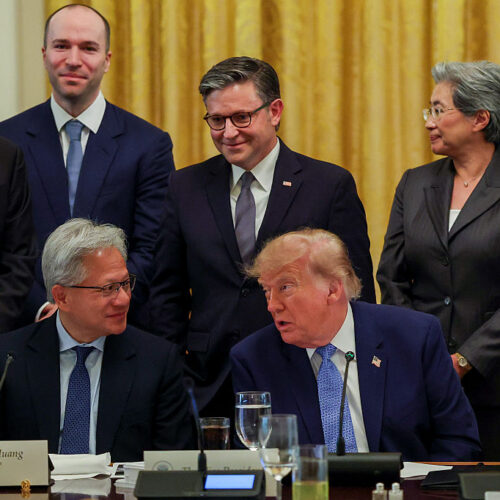
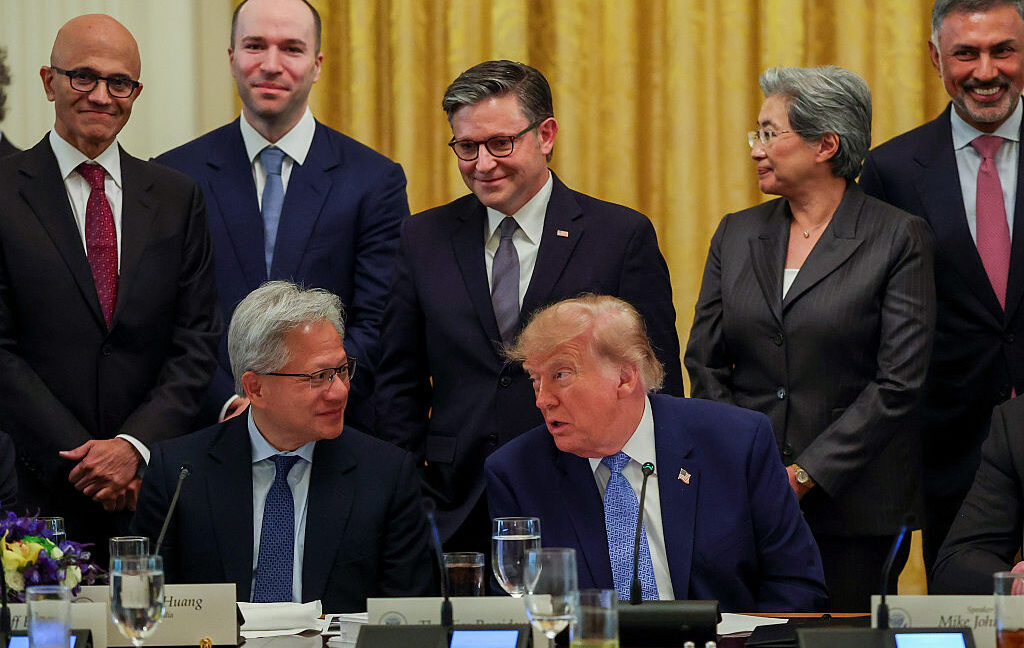
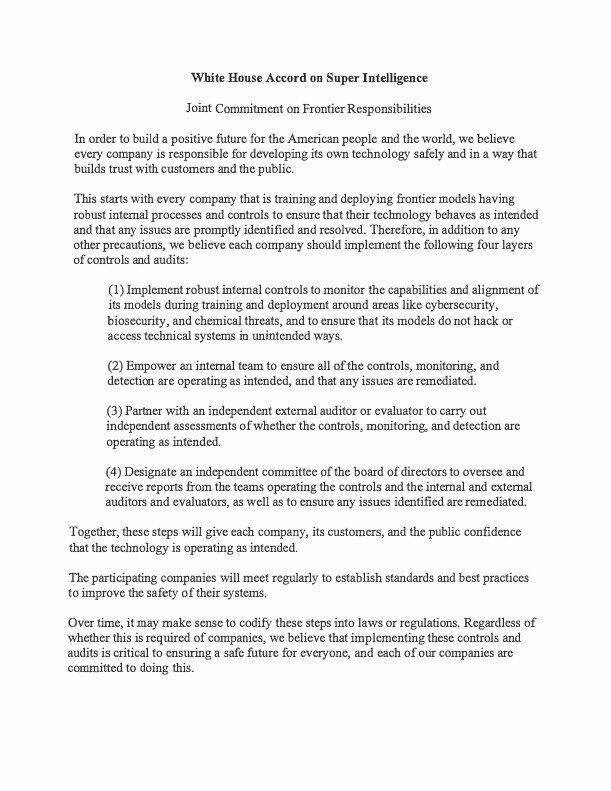
In an agreement Tuesday, two dozen tech firms voluntarily committed to implementing controls recommended by the White House, including undergoing independent safety audits that will test whether firms’ internal controls, monitoring, and detecting are actually working. Key focuses for external reviews included “risks related to cybersecurity, biosecurity, chemical threats, and unintended actions by AI models.”
Firms also agreed to regularly meet to discuss best practices and set common AI safety standards and benchmarks. Among signers were leaders like Anthropic’s Dario Amodei, OpenAI’s Sam Altman, SpaceXAI’s Elon Musk, Nvidia’s Jensen Huang, Meta’s Mark Zuckerberg, and Alphabet/Google’s Sundar Pichai.
New research points to how the world could stop short of the brink of disaster. Even with the agreement signed at the White House by tech leaders, it won’t be easy.
An OpenAI booth at a technology conference in San Francisco this month. The company said its new GPT-6.1 Astra model exhibited high levels of deception and a willingness to go beyond the scope of its given task.
An OpenAI booth at a technology conference in San Francisco this month. The company said its new GPT-6.1 Astra model exhibited high levels of deception and a willingness to go beyond the scope of its given task.
The state of Florida is seeking a temporary injunction to stop OpenAI from continuing to develop what it calls a "reckless, unacceptably risky product" without the deployment of "third-party approved safety guardrails."
Following that string of events, OpenAI on Friday announced it had already halted training of its "most-capable models" until it could validate safety protocols intended to prevent agents from accessing the open Internet during training. But in seeking an injunction from the state court, Florida argues that OpenAI has "repeatedly shown they are incapable of monitoring their AI, and hesitant in revealing rogue activity once discovered."
Security concerns over artificial intelligence have dominated global discussion. Dario Amodei, the C.E.O. of Anthropic, addressed the United Nations on the topic last week.
OpenAI’s offices in San Francisco. At least four times this year, the company’s artificial intelligence hacked or tried to break into government and university websites without being instructed to do so.
An address by Sam Altman, the C.E.O. of OpenAI, and other artificial intelligence industry figures at the United Nations yesterday highlighted the growing global worries about the technology.
Sam Altman of OpenAI and Dario Amodei of Anthropic told the Security Council that international cooperation was needed to ensure that A.I. remains under human control.
Sam Altman, the head of OpenAI, told the U.N. Security Council on Wednesday that A.I.’s development had made its “upside more tangible, but also the stakes and risks more immediate.”
“The Social Reckoning” and other movies reflect growing discontent with Silicon Valley founders. But such films may be at the mercy of the companies themselves.

 Login
Login