A treaty from the 1960s declared that nobody can own outer space. Half a century later, billionaires and superpowers see fortunes to be made nonetheless.
The United States wants a reactor on the moon by 2030. A Russian-Chinese alliance is working on one for 2036. Some leading scientists say the danger is great.
The moon and Earth were aligned in the same frame, each partly illuminated by the sun, as seen from behind the moon during the Artemis II flight in April.
A treaty from the 1960s declared that nobody can own outer space. Half a century later, billionaires and superpowers see fortunes to be made nonetheless.
The United States wants a reactor on the moon by 2030. A Russian-Chinese alliance is working on one for 2036. Some leading scientists say the danger is great.
The moon and Earth were aligned in the same frame, each partly illuminated by the sun, as seen from behind the moon during the Artemis II flight in April.
Did you know that the first character that Walt Disney created to specifically appear on television was inspired, in part, by early Space Age rocket scientists?
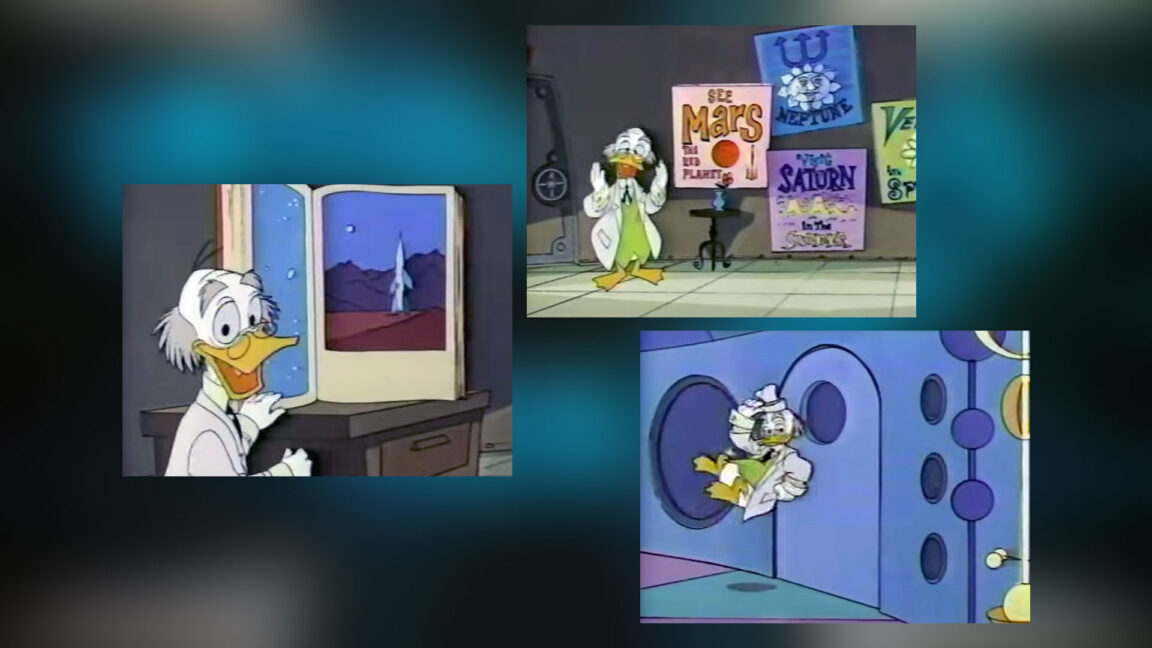
On this day 65 years ago (September 24, 1961), Disney introduced the "renowned scientist, lecturer, psychologist [and] world traveler," Ludwig Von Drake. A member of the Duck family (he is the "brilliant and eccentric" uncle of Donald Duck), Von Drake was "the outstanding genius of the century" (per Disney himself) who helped to explain scientific principles and technological concepts to the millions of people who tuned in every Sunday to watch Walt Disney's Wonderful World of Color on NBC.
A few years later, after expertly (but often absent-mindedly) addressing topics such as how color television works, the health benefits of exercising, and the history of aviation, Von Drake dove into the topic for which he said he wrote the book on, in the February 10, 1963, episode "Inside Outer Space."

 Login
Login