The climate event is predicted to alter snowfall patterns across the U.S. and Canada. Experts are starting to see how it might play out across ski country.
A skier last winter at Mt. Bachelor in Bend, Ore. The Pacific Northwest is predicted to get less snow than usual this winter because of the super El Niño weather pattern.
The war in Iran, efforts to promote fossil fuels and attacks on renewable energy contributed to higher prices for gas and electricity that drove voter discontent.
President Trump made affordable and abundant oil a major part of his administration’s message the past few years. The president at the White House ballroom on Wednesday.
Economist William Nordhaus said putting a price on pollution was the best way to reduce climate change. Then came the fossil fuel lobby and the anti-tax movement.
Economist William Nordhaus said putting a price on pollution was the best way to reduce climate change. Then came the fossil fuel lobby and the anti-tax movement.
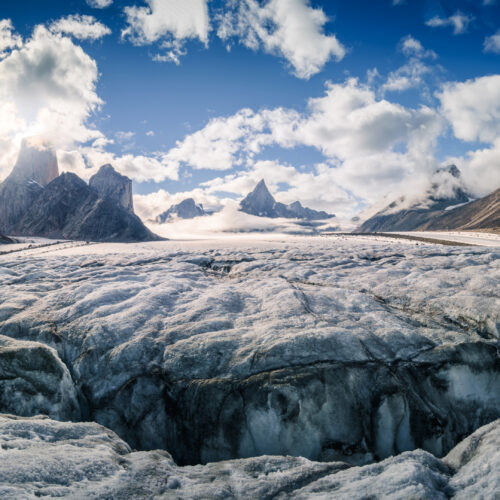
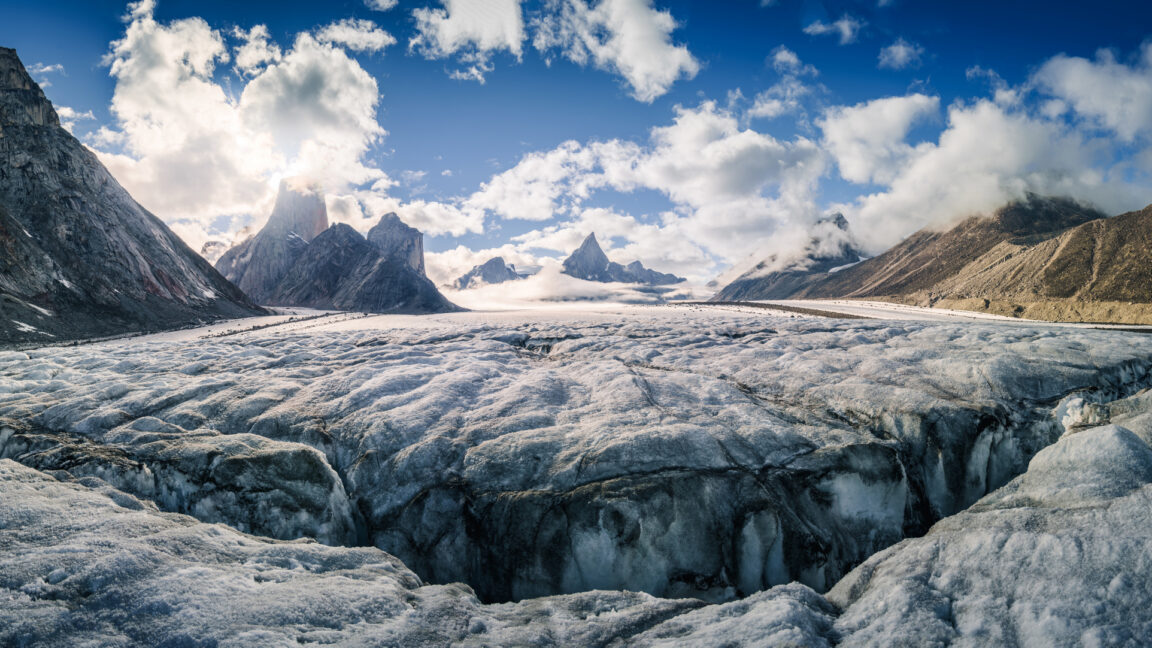
Barnes Ice Cap sits on the central plateau of Baffin Island, in the Canadian Arctic. It is the last surviving fragment of the Laurentide Ice Sheet, the largest of the Pleistocene ice sheets, which at its peak buried most of Canada under two miles of ice and locked away around 80 meters of sea level. That remnant has now yielded direct physical evidence that ice sheets might have reversed their retreat and started to grow again thousands of years ago.
In a recent Science study, researchers show that the Laurentide reached its smallest size about 3,600 years ago, then started re-expanding roughly 2,000 years ago, which the team interprets as the opening move of the next glaciation. Apparently, this brand-new ice age was on its way until about 1960, when human-caused climate warming reversed it.
Frozen to the bed
“Barnes is the last remaining piece of one of the domes of the Laurentide Ice Sheet,” says Nicolás Young, a geologist at Columbia University's Lamont-Doherty Earth Observatory and lead author of the study. As that enormous dome thinned through the Holocene, its margin withdrew up onto Baffin Island, and what's left today is the deflated core of something that was once two miles thick. The reason Barnes can testify about its own history, Young explains, comes down to the temperature at its base.

 Login