❌

Reading view

There are new articles available, click to refresh the page.

Someone got Doom in an SQL database

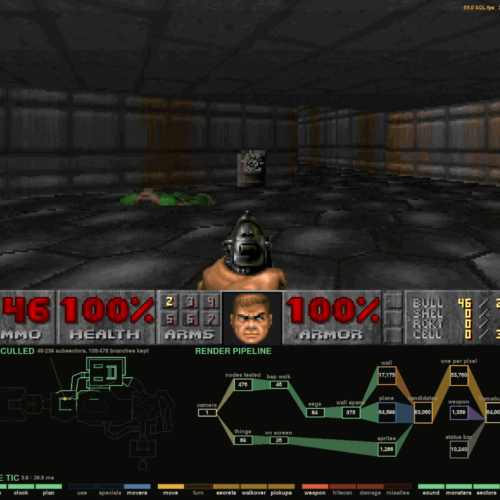
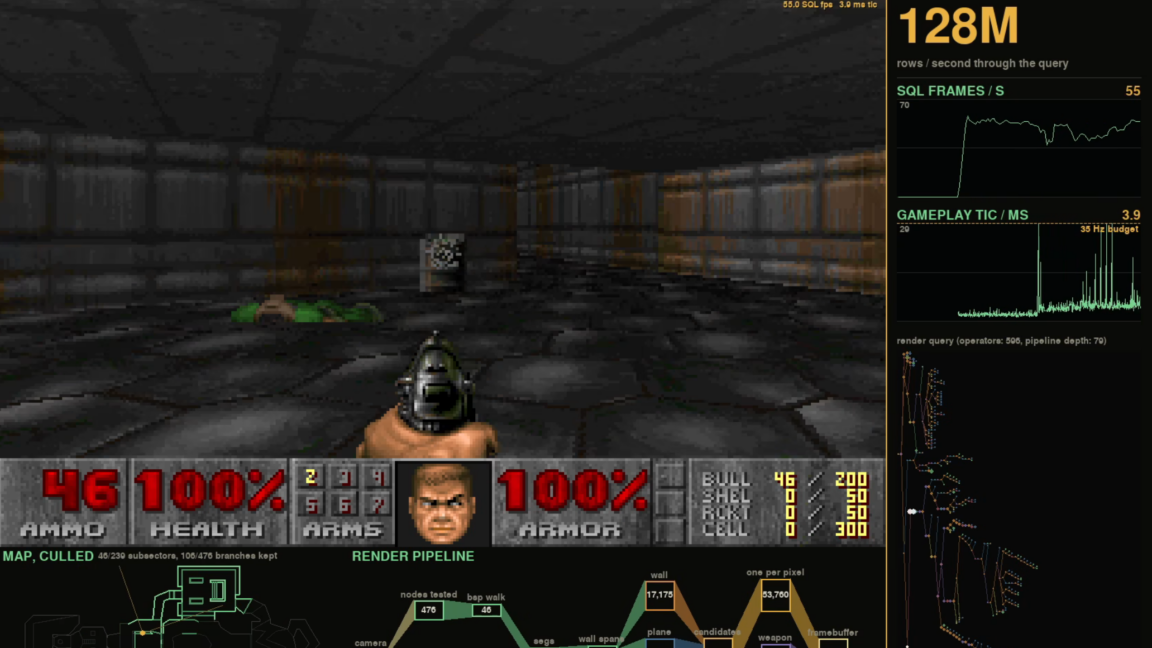
"Rendering Doom in a database is obviously a bad idea," Lukas Vogel writes in a lengthy blog post explaining how exactly he managed to render Doom using an SQL database.

OK, that's not entirely accurate. The SQLDoom project uses a small Python client to handle input and output, drive the game's timing, and display each frame to the screen. Behind that, a series of CedarDB tables tracks the game geometry and state, while about 1,300 lines of SQL queries spread across 89 common table expressions implement the game logic and generate 35 bitmap framebuffers per second.

In this, SQLDoom is a major improvement over Vogel's previous DoomQL project, which last year set out to build "a multiplayer Doom-like shooter entirely in SQL." Unfortunately, that effort ended up with raycasting-based, grayscale ASCII graphics that were more akin to the simplistic 90-degree-angled maps of Wolfenstein 3D. The newer SQLDoom, on the other hand, generates full-color 640x480 frames that look like they could have come from the original Doom executable.
Read full article

Comments

© Lukas Vogel

How I kept cool with NYC's free battery program for window AC units

My family has spent four summers participating in demand response programs whereby utility companies pay customers to reduce energy use on the hottest summer days. Most summers have involved carefully precooling our New York City apartment before switching off the air conditioners and sweating it out during the designated demand response periods.

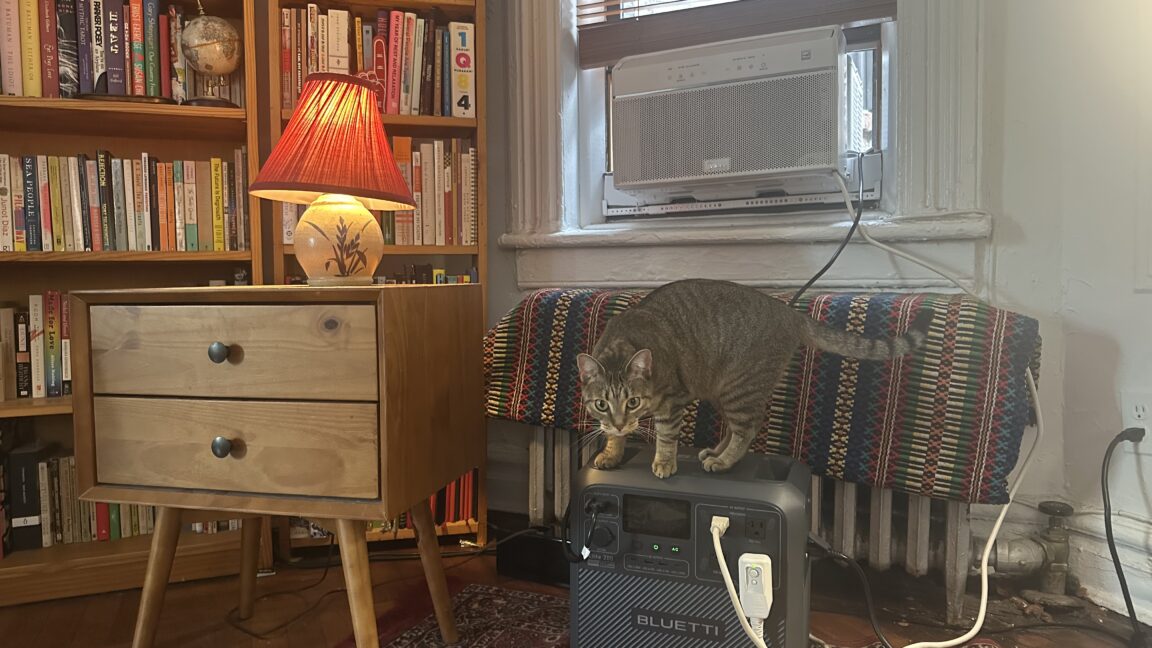
But this year, we kept our window air conditioners running throughout a heat dome event that drove daytime temperatures into the triple digits and made the nights oppressively hot. The difference was that we powered the air conditioners through two household batteries tucked away unobtrusively in the corners of our living room and bedroom.

We were among about 1,000 New York City households that took part in a free and growing program offered by the local startup Every Electric. The company’s proposition is simple: Get one or more batteries delivered to your home, plug the batteries into a standard wall electrical outlet, and then plug your window air conditioners into the batteries. Households can keep running air conditioners as usual during peak demand periods while also earning money through the local demand response program with the utility company Con Edison.

Read full article

Comments

© Jonathon Schaff, Green Juice (www.greenjuice.wtf)

Is solar's growth finally slowing in the US?

Normally, we try to update you quarterly on what's going on with the US electric grid since it provides a nice view of developing trends and smooths out some month-to-month randomness. Unfortunately, I was out of the office when last month's data was released, so this will be a seven-month update on 2026 trends.

The top line item is that energy use is continuing to rise, albeit not as quickly as headlines about data centers might lead people to believe. Beyond data centers, there's a growing electrification—things like EVs and heat pumps—that is shifting energy demands onto the grid. Despite all of this, electricity use has risen by only 2 percent compared to the same period last year. At this time the previous year, demand had risen by 3 percent compared to the year prior.

Some of this may be due to continued improvements in efficiency, which had largely kept electricity demand stable throughout the early 2000s. And some of it may be because more data centers are generating their own power so that demand doesn't show up on the grid. So far, the growth in demand hasn't reached apocalyptic levels.

Read full article

Comments

© Lu ShaoJi

F-Droid gets its biggest update in a decade with new UI and smoother app installs

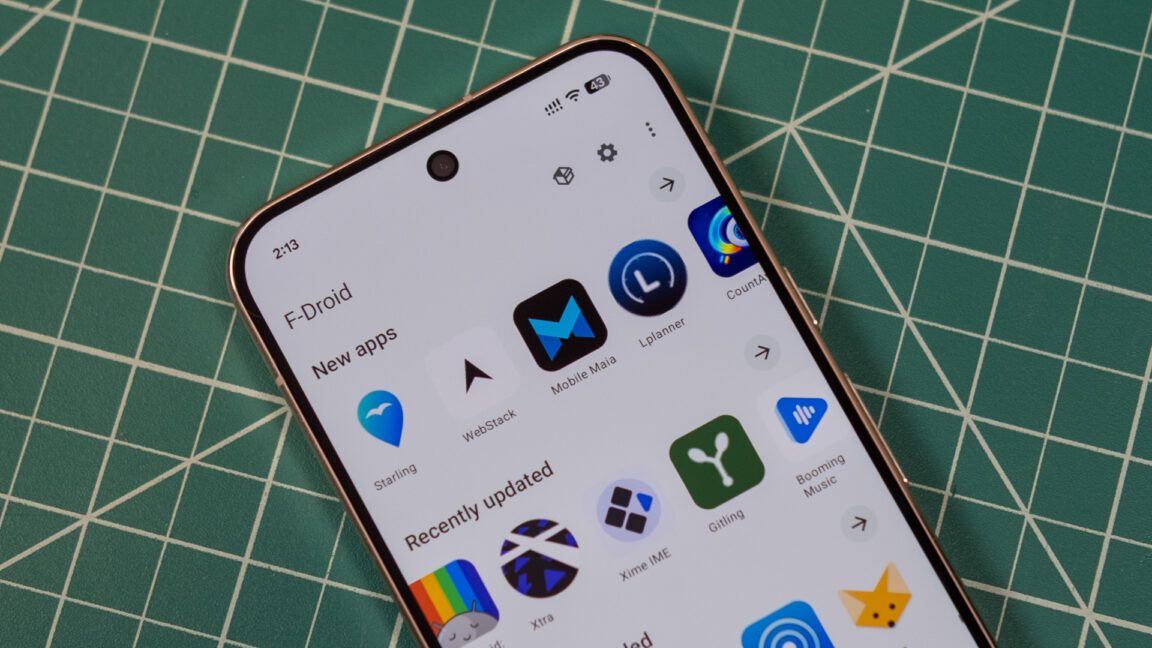
Virtually every Android device comes with the Play Store preloaded, but there are other ways to get apps. F-Droid bills itself as a community-driven source for free and open source Android apps, but its official app store has gone 10 years without a major update. That's finally changing: After a multiyear effort, the team has just announced F-Droid 2.0 is rolling out.

The new F-Droid client was redesigned from scratch in Kotlin Compose, which is the standard for modern Android apps. This makes the store much more responsive, and there's optional support for Android's Material theming. The interface has also been cleaned up considerably, making the most important functions easier to access and hiding some others in overflow menus.

While the new F-Droid looks nicer, the update was largely about making it easier to find and install apps. When F-Droid first appeared, there wasn't much to see, but now it has thousands of open source apps. Unlike the Play Store, F-Droid doesn't track your taps and installs to push ads and suggestions—it helps you find things and gets out of the way.

Read full article

Comments

© Ryan Whitwam

❌