Reading view

There are new articles available, click to refresh the page.

Googlebooks launch October 4 starting at $899—here are the five models you can preorder today

Google is ready to take a swing at laptops... again. The company has had a lot of success in phones, but it has struggled to parlay that into an effective strategy for larger screens. Chromebooks have been fine as a budget option, but it seems like Google has accepted they'll never compete with macOS or Windows. That's where Googlebooks come in. These new Android-powered laptops are intended to be "real" computers, featuring premium hardware, on-device apps, and powerful development tools.

After the Googlebook reveal at I/O this year, Google's partners are now ready to sell you one. The first Googlebooks are available from several OEMs that have been making Chromebooks over the years, but don't expect Chromebook pricing. There's only one model under a grand, and the rest are well above that.

Familiar hardware

The bulk of Chromebooks have been budget machines, and they looked the part. Googlebooks, however, feature bright OLED screens, metal builds, big haptic trackpads, and the Glowbar. All the machines have this illuminated bar on the lid, but it doesn't do much for now. It lights up when the device boots and can display battery level, but Google says it's going to release an API for developers to add more features.


Read full article

Comments

© Google / HP

An undercover Google analyst infiltrated a notorious supply-chain hacking gang

Before two of its alleged members were arrested and charged in Australia last month, the hacker group known as TeamPCP carried out a hacking spree unlike any other in history. It tainted hundreds of open-source programs with its malware, stole developer accounts to perpetuate that software supply-chain hacking, and even released a Dune-themed self-spreading worm to automate the process, ultimately breaching more than a thousand companies.

Now Google’s threat intelligence group has revealed that during a key moment of TeamPCP’s rampage, the company’s own undercover researcher had infiltrated the group—allowing Google to monitor the hacking spree from the inside, warn breach targets, and even help disrupt the group’s attempts to exploit those victims.

In a talk at security firm SentinelOne's LABScon research conference today, Google Threat Intelligence Group researcher Austin Larsen will present details on the company’s investigation—and infiltration—of TeamPCP amidst the group’s unprecedented, chaotic supply-chain hacking campaign. According to Larsen, Google eventually followed a trail of operational security mistakes allegedly made by one of the two Australians now accused of being leading members of the hacker group and passed on key identifying details to law enforcement. The company also received intelligence from ShinyHunters, another infamous cybercriminal group that TeamPCP partnered with, but which later turned on the supply-chain hackers. And perhaps most surprisingly, Larsen says that Google’s security subsidiary Mandiant had an undercover analyst—not himself—within the group’s inner circle from almost the beginning of TeamPCP’s time in the spotlight.

Read full article

Comments

© Douglas Rissing via Getty Images

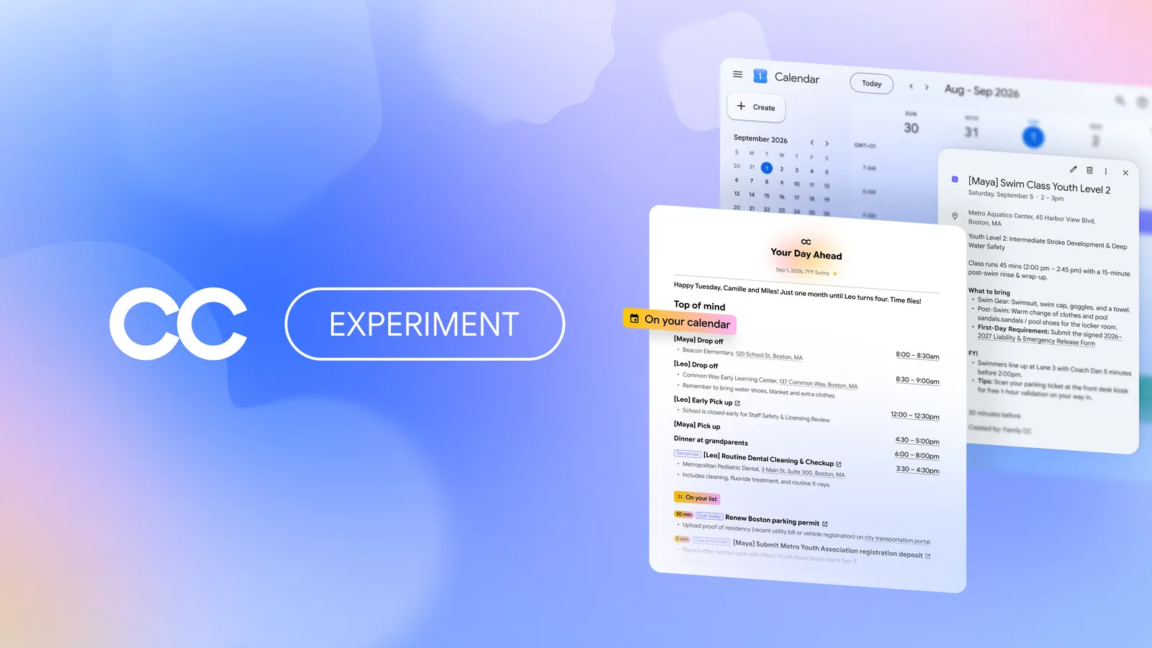
Google announces new experimental "CC" AI agent for families

Google's AI models may not be in the lead by most measures right now, but the company does have one key advantage: your data. If you're deep in the Google ecosystem, Gemini models have a lot of context on you already. Google's latest Google Labs experiment, known as CC, aims to expand that kind of customization to the whole family.

CC is an evolution of something that Google announced in 2025. The original CC eventually became Gemini's Daily Brief, which churns through the data in your Google account to offer daily action items and suggestions. The new CC has a similar goal, but it's designed to be a shared resource for up to six users in a family.

Google says that CC has its own Google account, allowing each family member to interact with it (or not) as they choose. For example, CC only sees emails from its connected users if they are explicitly shared. You can do that by designating certain addresses as always available to the agent—something like school scheduling emails. You can also send content to CC via email or Google Chat. The agent can even monitor a shared Google Drive folder, into which you can dump invitations, documents, and other content.

Read full article

Comments

© Google

❌