❌

Reading view

There are new articles available, click to refresh the page.

The 2008 economic crisis changed the US's relationship with energy

One argument that often comes up about climate change is that fossil fuels are good because they powered economic growth that has left most people better off overall. And, to an extent, that has been true, but it's also an extremely limited perspective.

It's pretty obvious now that the growth they powered has come with very high costs that we've only recently started to pay, in the form of damages and disruptions from extreme weather events. With things like sea level rise expected to continue for centuries even if we hit net zero, it's difficult to estimate how expensive that growth will eventually be.

But that perspective is also limited: We now have better ways to power our growth—ways that are less environmentally damaging now and won't leave our descendants with a carbon debt that will be difficult to manage.


Read full article

Comments

© Ryan J Lane

Research roundup: 6 cool science stories we almost missed

It’s a regrettable reality that there is never enough time to cover all the interesting scientific stories we come across. So every month, we highlight a handful of the best stories that nearly slipped through the cracks. September’s list includes a tantalizing hint of the elusive dark matter at the LUX-ZEPLIN detector; entangled Z bosons at the Large Hadron Collider; possible use of psychoactive substances in the Late Pleistocene; and an intriguing technical description of a telescope attributed to Galileo.

A hint of dark matter?

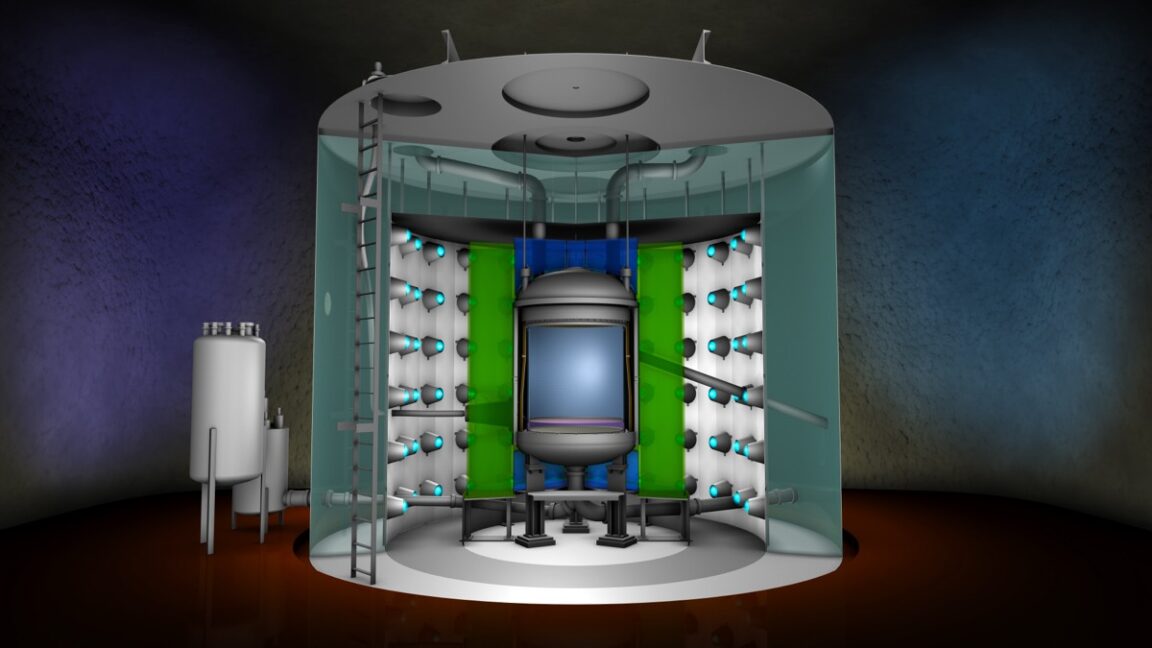
Physicists believe dark matter makes up roughly 85 percent of matter in our universe, with the strongest (but not only) candidate being so-called weakly interacting massive particles (WIMPs). But directly detecting WIMPs, or other alternative hypothetical dark matter particles, has eluded physicists for decades. We might have our first glimpse, however, courtesy of the LUX-ZEPLIN detector buried deep in a gold mine in South Dakota. Those potentially exciting results were presented in a scientific talk at the 2026 TeV Particle Astrophysics conference in Japan, with a preprint available on the arXiv. (It has been submitted to Physical Review Letters for peer review.)

The announcement came with strong caveats: the signal is just a hint, well below the threshold needed to confirm discovery, and might just be a statistical fluke. Anyone who regularly follows dark matter news knows that past tantalizing anomalies evaporated as more data came in. But the LUX-ZEPLIN team was unable to account for this event and decided to report their result to the broader physics community. They are still collecting data, as is the XENONnT at the Gran Sasso National Laboratory in Italy. And China's PandaX detector is currently being built.

Read full article

Comments

© Greg Stewart, SLAC National Accelerator Laboratory

Rocket Report: SpaceX completes launch triple-header; Rocket Lab nets big contract

Welcome to Edition 9.13 of the Rocket Report!

This week, SpaceX celebrated the first orbital launch of its new Starship rocket. I'm not sure many people, at least those outside of SpaceX, expected it to take 14 flights of Starship before it technically reached low-Earth orbit, but Monday morning's launch finally added that to SpaceX's list of accomplishments with its new super-heavy rocket. Starship had gone 99 percent of the way to orbit before, only held back by safety concerns around the possibility of stranding the huge rocket in space.

What was most notable for SpaceX with this Starship flight was that it unlocked a massive growth potential for Starlink, with the first 26 of the network's new-generation Starlink V3 satellites successfully deployed Monday.

Read full article

Comments

© SpaceX

If a data center is camouflaged in the woods, will anyone hate it?

Art depicts a data center surrounded by greenery.

San Antonio City Councilmember Ric Galvan remembers when data centers first arrived in his city in the 2000s, looking like relatively unassuming office buildings. But that's changed in recent years, as data centers have grown into massive "hyperscale" facilities spanning millions of square feet and housing the physical infrastructure for AI.

There are now more than a dozen data centers in Galvan's roughly 55-square-mile district, and he expects that number to grow to around 20 over the next few years if proposed projects are completed. They're clustered along two main roads, concentrating nuisances in the same neighborhoods: traffic and tr …

Read the full story at The Verge.

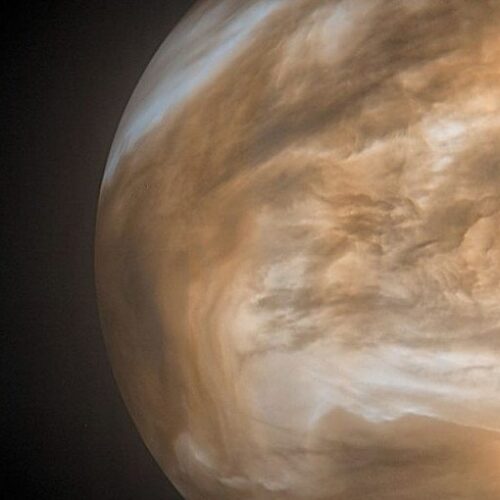
Venus' mysterious haze is actually cosmic dust

Venus is shrouded in a veil of mystery. The yellowish “lower haze” at the bottom of its atmosphere was discovered by the Venera and Pioneer Venus probes in the 1970s. These spacecraft were some of the first to successfully send images of the planet back to Earth, but the haze they saw went unexplained for decades. Now the mystery Venus was keeping has been unveiled.

What nobody knew then was that the haze is an accumulation of particles from meteorites. “Shooting stars” that burn up in the atmosphere leave behind cosmic dust particles, and after sulfuric acid interacts with these particles, it leaves behind a haze. Planetary scientist Hiroki Karyu and his research team at Tohoku University in Sendai City, Japan, finally figured out how the haze formed using a microphysical model. This type of model involves microphysics—the micro-scale processes that create clouds and precipitation on Earth and other bodies.

“The continuous influx of cosmic dust is sufficient to sustain this lower haze layer with the particle size distribution observed by the entry probes,” Karyu said in a study published in Nature Astronomy. “These haze particles of cosmic origin act as efficient condensation nuclei, promoting cloud formation in the main cloud deck even far from their initial source.”

Read full article

Comments

© JAXA / ISAS / DARTS / DAMIA BOUIC.

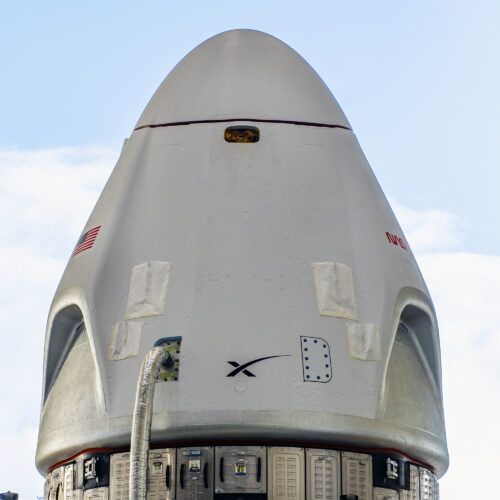
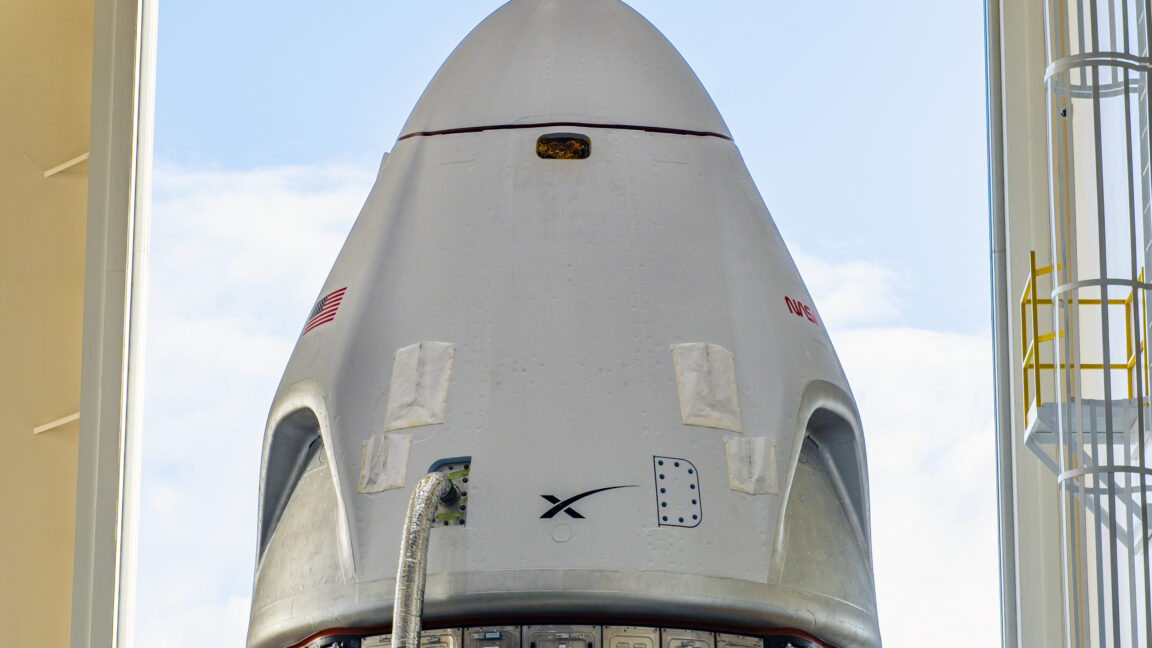
SpaceX describes surgical intervention before launch of latest crew mission

A four-person crew rocketed into orbit Thursday from Cape Canaveral Space Force Station, Florida, heading for a six-month expedition on the International Space Station.

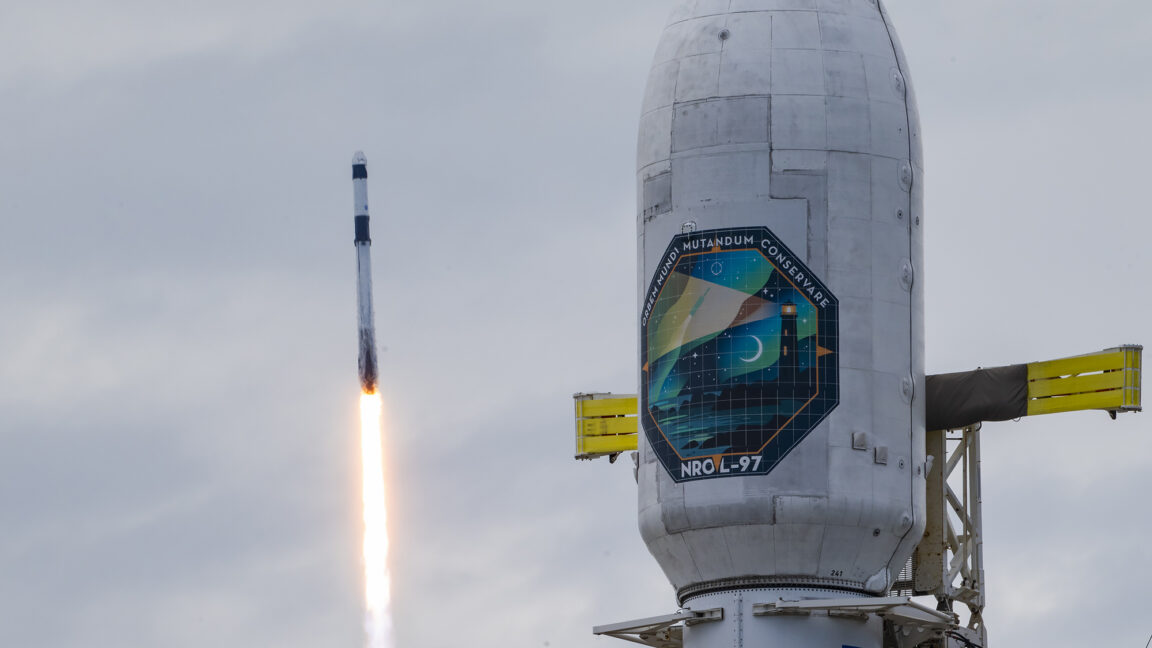
Riding a Falcon 9 rocket and Dragon spacecraft, the four crew members departed from Space Launch Complex-40 at Cape Canaveral at 11:10 am EDT (15:10 UTC) Thursday. Nine minutes later, they were in orbit to begin closing in on the space station for docking Thursday evening.

The launch was delayed from mid-September to replace a balky valve in the Dragon spacecraft's propulsion system, a task that involved cutting into a propellant line inside the ship to swap out a faulty component.

Read full article

Comments

© SpaceX

With most information hidden, the game Stratego had stumped AI—until now

Deep Blue took down Garry Kasparov at chess in 1997, AlphaGo beat Lee Sedol at Go in 2016, and poker bots have been beating professionals for years. But one classic game called Stratego held out. Even DeepMind, with its exceptional budget, couldn't build a machine that reliably beat the best human players.

Now, a team of researchers from Carnegie Mellon, MIT, New York University, and Stanford University has done it. Their AI, called Ataraxos, beat Pim Niemeijer, arguably the best Stratego player of all time, 15 games to one, with four draws. And it took just 16 GPUs and a few thousand dollars to train it.

Hidden armies

In Stratego, each player gets 40 pieces representing military ranks, from a marshal down to a spy, plus bombs and a flag. You win by capturing the opponent's flag. Your opponent knows where your pieces are, but not what they are. Identities are revealed only when two pieces collide in battle—the weaker one is removed, and the identity of the winner is revealed. That makes Stratego an imperfect-information game, just like poker, which computers cracked years ago. “There's something super distinctive about Stratego, which is that it is a massive amount of hidden information that unfolds over a very long time scale,” said Eugene Vinitsky, a researcher at NYU and co-author of the study.

Read full article

Comments

© Vectorwin

Dinosaur-killing impact crater might have been teeming with life

About 66 million years ago, the Chicxulub asteroid smashed into Earth, kicking up tsunamis and dropping hot debris that annihilated non-avian dinosaurs and many other species. But not everything it left in its wake was destructive. This space rock hit what is now the partially submerged Yucatan Peninsula, and at the bottom of the ocean, the impact generated enough heat to create a hydrothermal system that persisted for 8 million years and may have been a hotbed of life.

When researchers drilled for samples in the impact zone in 2016, they studied the types of rock that had formed as a result of the asteroid strike. This gave more insight into what happened in the immediate and long-term aftermath of this cataclysmic event.

The collision was intense enough to cause deformation far beneath the surface. Subterranean effects reached 35 km (almost 22 miles) down, and included the melting an immense amount of rock. Exposure to seawater made that rock porous. As hot water seeped into the pores, a hydrothermal system formed. The hot water gushing into an isolated region of the freezing depths could have attracted microorganisms and possibly other life forms that were otherwise struggling to survive.

Read full article

Comments

© MARK GARLICK/SCIENCE PHOTO LIBRARY

A local network of implants uses your body as the wiring

Most implants like pacemakers and insulin pumps work in isolation. To help them coordinate with each other, a team of Georgia Tech researchers built a networking system that sends signals through body tissue instead of antennas and radio waves.

Radio problems

Implants that communicate today mostly rely on radio protocols like Bluetooth Low Energy or near-field communication (NFC). Both are a poor fit for in-body data transfer, says Alex Abramson, a Georgia Tech engineer and co-author of the new study.

The first problem is power. “If you want an implant to remain in an active state such that it can respond within milliseconds, it's very difficult to do that with the Bluetooth system,” Abramson said. According to the paper, Bluetooth components, when they’re activated, can cut an implant's battery life by up to 90 percent.

Read full article

Comments

© Arturo Peña Romano Medina

Google figures out how to watermark AI-designed proteins

AI-based tools seem to be causing security threats on a nearly daily basis, in part because we've been slow to recognize potential threats. One area where we seem to be ahead of the game, however, is in biosecurity.

As with most things biological, utility goes hand in hand with threats. We've developed increasingly sophisticated tools for designing proteins and seen some major successes, such as AI-designed enzymes that can digest plastics or block venom proteins. But these same tools could be used to make toxins or alter the behavior of viral proteins.

And the software we use to identify DNA sequences that encode potentially threatening proteins doesn't pick out AI-designed proteins, since nobody has characterized them well enough to know that they're threats. Nearly a year after that risk was flagged, it still wasn't clear what anyone could do about it.

Read full article

Comments

© ALIOUI Mohammed Elamine

What butterfly wings have in common with barbershop poles

Old-fashioned striped barbershop poles turn in place on a vertical axis, but humans typically perceive the stripes moving upward rather than turning with the pole. It's a well-known visual illusion arising from processing biases in human vision. According to a new paper published in the journal Nature, a similar effect could explain how butterflies often evade predatory birds: Their flight patterns and wing patterns combine to make it hard for predators to accurately gauge speed and direction.

"The stripes and spots on many butterflies’ wings interfere with the way visual systems try to guess the direction and speed of moving things, boosting false motion cues while hiding the butterfly's true heading," said co-author George Hancock of the University of Exeter in Cornwall. "The illusions interfere with the predator’s most basic visual targeting system and disrupt the final ‘ballistic attack’ in the tens of milliseconds when it commits to grabbing its prey, with no time to change course. As a result, birds and other predators will often simply miss."

Butterfly wings have long fascinated scientists, ever since the first documentation of the growth of said wings back in 1938. By 2021, researchers at MIT had captured on video the unique structural growth of butterfly wings—continuously, as a butterfly develops inside its chrysalis—for the very first time. Butterfly wings are an example of structural color in nature: the bright iridescent colors don’t come from pigment molecules but from what physicists call photonic crystals. The scales of chitin (a polysaccharide common to insects) are arranged like roof tiles. Essentially, they form a diffraction grating, except photonic crystals only produce certain colors, or wavelengths, of light, while a diffraction grating will produce the entire spectrum.

Read full article

Comments

© George Hancock

This blog could help you poop better

a lot of poop emojis on a red background

This is Optimizer, a weekly newsletter sent from Verge senior reviewer Victoria Song that dissects and discusses the latest gizmos and potions that swear they're going to change your life. Opt in for Optimizer here.

"I will explode your butthole with this poopmaxxer pesto," a calm Gen Z voice announced from my phone's speakers. "And don't worry, it doesn't taste like poop, unless that's what you're into … I don't know if Italians will approve of this, but it's for my … a-butt-a-hole-a!"

What followed in that video was actually a pretty good recipe. Two cups of blanched peas mixed into a fairly standard pesto recipe for a yield of 18 grams …

Read the full story at The Verge.

Less protein for maggots means longer lives for fruit flies

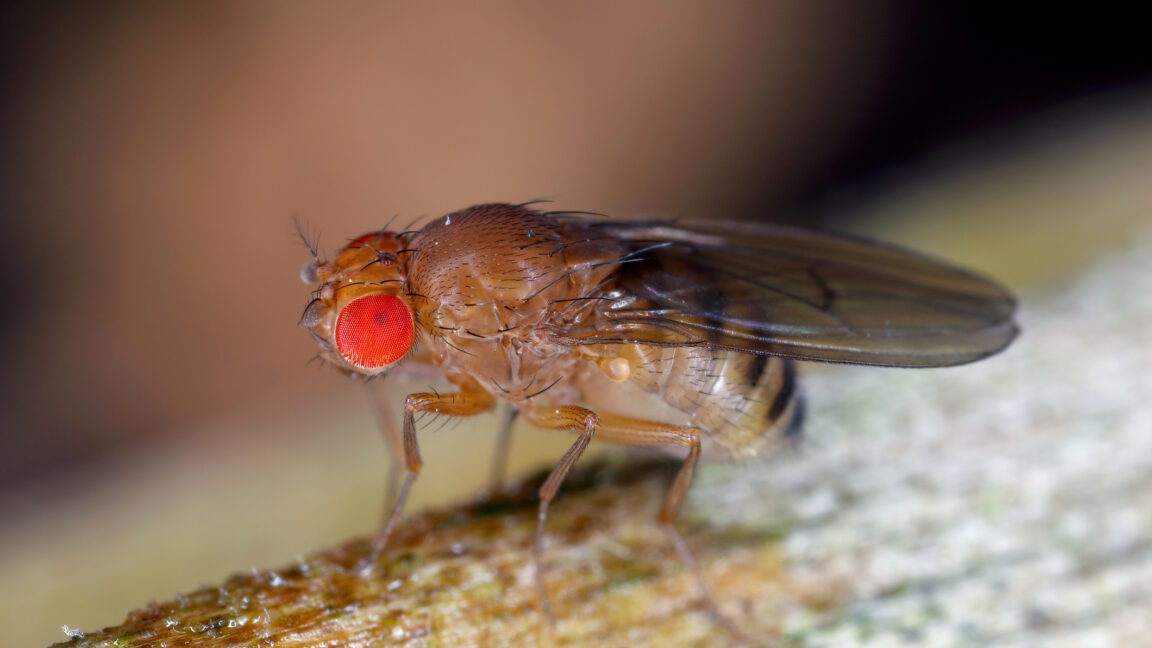
Back in the 1930s, scientists noticed that water fleas and rats fed restricted diets while young went on to live longer. The same effect has since turned up in fruit flies and mice. What we did not know was how a meal eaten in infancy could affect health weeks, months, or even years later. A recent Nature study might have found the answer.

A team led by Fumiaki Obata, a biologist at the RIKEN Center for Biosystems Dynamics Research in Kobe, Japan, found a protein that carries a record into adulthood of what fruit flies ate as larvae, influencing how long they live.

Hungry maggots

Lab fruit flies are fed a mix of yeast and sugar, with yeast being their main source of protein. “We decreased only the yeast concentration in the diet, from eight percent to either one or two percent,” Obata explains. This low-protein diet was introduced roughly halfway through the larval period. Once the flies emerged from their pupae as adults, they returned to standard food.

Read full article

Comments

© Tomasz Klejdysz

New device captures carbon dioxide by pumping it across a battery

Equipment to capture carbon dioxide from ambient air or smokestacks generally works through a sort of reversible filter. Air is passed through granules or a liquid that absorbs the CO2, then that CO2-loaded substance undergoes a process (usually heating) that causes it to let go of all that CO2. The resulting gas can be collected in a separated stream.

It’s also possible to do a similar sort of operation on a smaller scale—like inside a battery. A new study from a team led by James Buchen of the University of Delaware demonstrates an example of a battery-based electrochemical carbon-capture technique that they say is more viable than previous attempts. It has the potential to require less energy—and therefore be cheaper—than the reversible-filter designs that currently dominate.

Carbon chemistry

The basic idea behind a device of this type is that hydroxide produced at the battery cathode reacts with CO2, converting it to carbonate or bicarbonate that passes through the separator membrane to the anode. There, the lower pH causes the reaction to reverse, with carbonate turning back into CO2 gas. The role of the cathode is to produce hydroxide ions; the role of the anode is to consume them.

Read full article

Comments

© MirageC

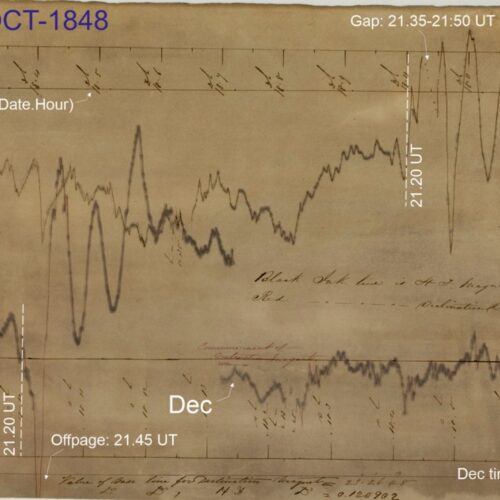
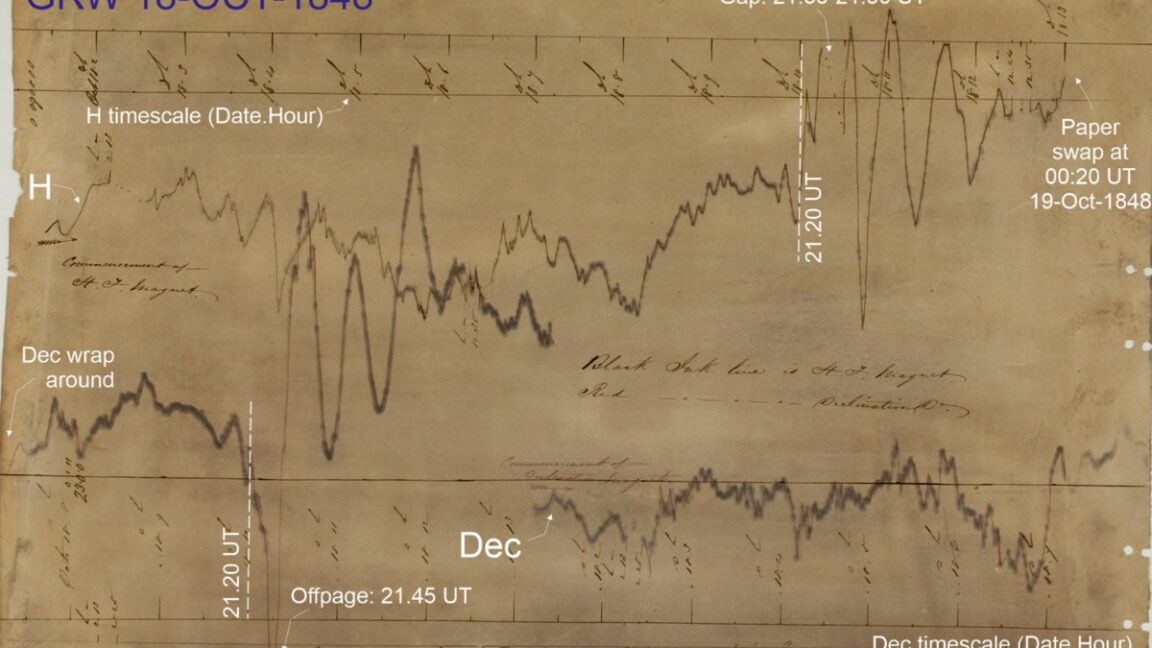
Scientists solve 1840s space weather mystery

The infamous Carrington Event of 1859 has long been considered the first extreme space weather event, but there have been reports of minor disturbances to telegraph equipment during geomagnetic storms since the late 1840s. In 2013, scholars discovered an anonymous report published in 1871 in Nature describing how a "very intense magnetic disturbance" disrupted rail travel in Exeter on the southern coast of England in October 1841. If accurate, this would be the earliest such account. However, according to a paper published in the journal Space Weather, that 1841 date is most likely a typo, with the real railway disruption occurring several years later.

"Space weather is often discussed as a modern challenge because of our dependence on technologies such as satellites, communications systems and electricity networks," said co-author Jim Wild of Lancaster University. "What this study shows is that society has been experiencing the effects of space weather on technology for almost as long as electrical technologies have existed. The Exeter train delay is a fascinating story because it sits right at the point where emerging technologies first began to encounter the realities of the space environment."

The Carrington Event remains the most powerful geomagnetic storm in the scientific record, with strong auroral displays occurring all over the world, causing sparking and even a few fires in telegraph stations. Some of the auroras were so bright that people reported being able to read the newspaper by their light. The telegraph was a relatively new technology at the time, having first emerged in the 1830s, and the geomagnetically induced current—from a likely coronal mass injection from the Sun—knocked out telegraph systems. Some operators found they were still able to transmit and receive messages even after disconnecting the power supply, relying just on the powerful auroral current.

Read full article

Comments

© J.A. Wild et al., 2026

Trump finalizes rule to make cars less fuel efficient

President Donald Trump announces plans to weaken fuel efficiency and emissions rules for cars and trucks in the Oval Office at the White House in Washington, DC, on December 3rd, 2025. | Photo: Getty Images

The US Department of Transportation finalized its plans today to weaken fuel efficiency standards, calling it "among the largest deregulatory actions under the second Trump Administration."

It's a nail in the coffin for Biden-era standards that would have required fleet average fuel economy to reach 50.4 miles per gallon by model year 2031. President Donald Trump's plan requires 34.9 miles per gallon, not much higher than the 30.1-mile-per-gallon target previously set for model year 2024.

Consumer advocacy, health, and environmental groups are incensed

The Trump administration claims its plan would shave $1,300 off the average cost of a n …

Read the full story at The Verge.

Philips’ motion-tracking smart toothbrush uses AI to make you a better brusher

The Philips Sonicare Next-Generation DiamondClean 9900 Prestige smart toothbrush against a simulated background full of water.

First announced in July with an expected limited launch later this year, the Philips Sonicare Next-Generation DiamondClean 9900 Prestige smart toothbrush is now available in Europe and the US, with a broader global rollout expected in 2027. While the previous iteration is still available and discounted from $429.99, the new "Next-Gen DiamondClean" version is debuting for $379.99 even with its added capabilities. It doesn't floss for you, but it's cheaper than Dyson's $499 CameraJet smart toothbrush that some early adopters are having issues with.

The Next-Generation DiamondClean 9900 joins a growing list of devices with built-in displays t …

Read the full story at The Verge.

SpaceX preps next-gen Starlink as Amazon’s competitor stalls

Rocket launching with graphic of constellations.

SpaceX is gearing up for a monumental flight today that's sure to be closely watched by Amazon. If successful, SpaceX will deploy its first Starlink V3 satellites, which tout meaningful upgrades to the ever-expanding Starlink constellation. The 26 satellites will be riding atop Starship, which SpaceX will also attempt to deploy into Earth orbit for the first time. The mission arrives amid Amazon's ongoing setbacks with launch partners that are keeping its own Leo satellites grounded, and falling further behind its plan to offer a meaningful rival to Elon Musk's space internet service.

It's been 12 weeks since Amazon's last successful Leo de …

Read the full story at The Verge.

Is solar's growth finally slowing in the US?

Normally, we try to update you quarterly on what's going on with the US electric grid since it provides a nice view of developing trends and smooths out some month-to-month randomness. Unfortunately, I was out of the office when last month's data was released, so this will be a seven-month update on 2026 trends.

The top line item is that energy use is continuing to rise, albeit not as quickly as headlines about data centers might lead people to believe. Beyond data centers, there's a growing electrification—things like EVs and heat pumps—that is shifting energy demands onto the grid. Despite all of this, electricity use has risen by only 2 percent compared to the same period last year. At this time the previous year, demand had risen by 3 percent compared to the year prior.

Some of this may be due to continued improvements in efficiency, which had largely kept electricity demand stable throughout the early 2000s. And some of it may be because more data centers are generating their own power so that demand doesn't show up on the grid. So far, the growth in demand hasn't reached apocalyptic levels.

Read full article

Comments

© Lu ShaoJi

With PRIMA, NASA will try to build a billion-dollar space telescope in record time

The first in a new class of space telescopes is on track to reach the launch pad in the early 2030s, NASA announced this week.

The PRIMA mission will be the first of NASA's Probe Explorers, a new line of observatories intended to do more science for less money. The agency's space telescopes typically fall into lower-cost "Explorer-class" missions, with cost caps in the range of a few hundred million dollars, or flagship observatories like the recently launched Nancy Grace Roman Space Telescope, which came with a price tag of some $4.3 billion.

With the Probe Explorers, NASA officials seek to find a better balance between the smaller Explorer missions and multibillion-dollar flagships. NASA has studied potential Probe Explorer mission concepts for several years after an independent panel of scientists recommended the new mission category. But it wasn't clear until recently whether NASA's science budget, which is under pressure from the Trump administration, would be sufficient to actually start developing one.

Read full article

Comments

© NASA

❌