❌

Reading view

There are new articles available, click to refresh the page.

Ukraine’s drone strikes spur hasty Russian plans for underground data centers

Russian tech companies are scrambling to harden and hide their data centers underground after Ukrainian drone strikes damaged facilities housing AI supercomputers and disrupted cloud services for millions of Russian users. Meanwhile, the Kremlin is requiring data center owners to reserve computing capacity for emergency state needs and has even authorized possible use of foreign data centers.

These consequences of Russia's war against Ukraine come as the Russian military has bombarded Ukrainian cities with drones and missiles nearly night and day in recent months, along with specifically targeting Ukrainian data centers since late September. But Ukraine has retaliated with its own drone strikes on military and infrastructure targets across Russia, degrading or knocking out data centers operated by Russian tech giant Yandex, the state-owned bank Sberbank, social media site VKontakte, and the Russian Ministry of Finance.

Now, state-owned telecommunications company Rostelcom has raised the possibility of moving some Russian data centers underground in talks with the nickel and palladium mining company Norilsk, according to Russian newspaper Vedomosti. The industry publication Data Center Dynamics also pointed to a recent proposal by a Russian regional governor to build data centers within open-pit coal minesΒ while planting green public parks above as camouflage.

Read full article

Comments

Β© Alexander Manzyuk/Anadolu Agency via Getty Images

Russian spacecraft maneuvers in "extreme proximity" to satellite used by Ukraine

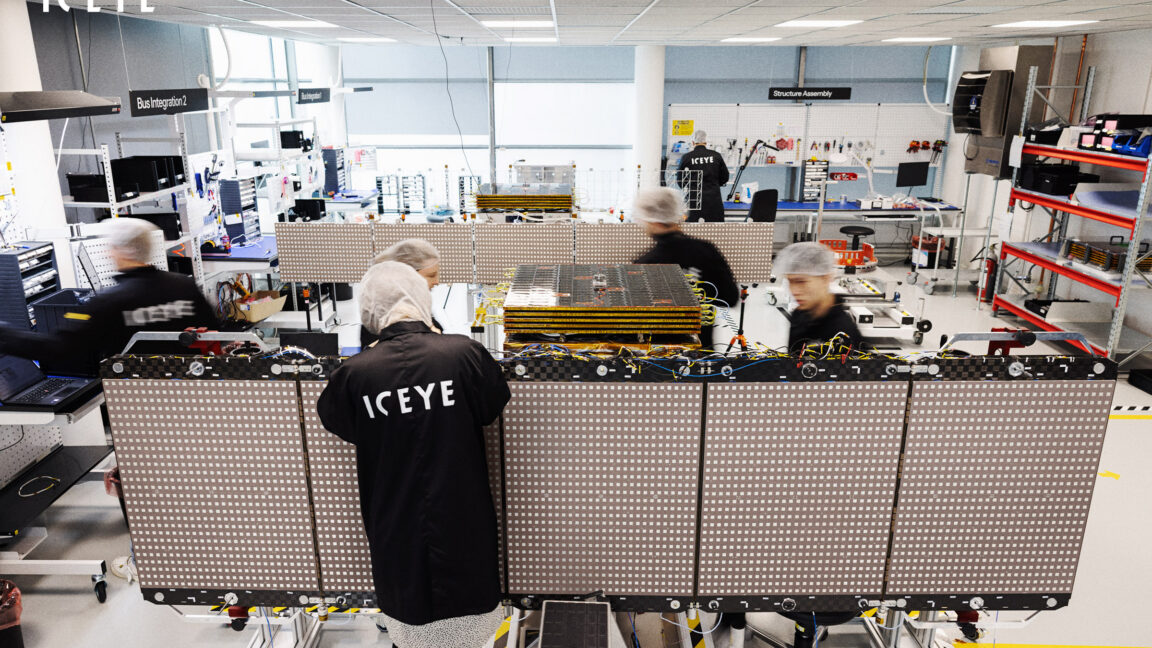
A Russian military satellite maneuvered in "extreme proximity" of a commercial Earth-imaging satellite in recent days in the first known example an unsanctioned rendezvous in low-Earth orbit, according to orbital intelligence company LeoLabs.

The Russian spacecraft, Kosmos 2612, "conducted a deliberate series of maneuvers toward ICEYE-X36, a US-operated commercial imaging satellite," LeoLabs said. "Kosmos 2612 closed from hundreds of kilometers away to extreme proximity to ICEYE-X36. It then maneuvered around ICEYE-X36, remained nearby for an extended period, and then began moving away."

US military officials and independent analysts have tracked Kosmos 2612 since its April launch on a Soyuz rocket from a spaceport in northern Russia. Within weeks, it became apparent that at least four of the six satellites from that launch were stalking ICEYE-X36 after they adjusted orbits to line up with the orbit of the ICEYE spacecraft.

Read full article

Comments

Β© ICEYE

Black Sea drone attacks enter NATO country's territorial waters for first time

Russian drones are suspected of sinking a cargo ship and leaving chemical tankers ablaze near the Black Sea coasts of Bulgaria and Romania, respectively. The latest attacks mean that at least seven ships have been attacked in the exclusive economic zones of NATO member countriesβ€”and even within Romania's territorial waters if Russian involvement is confirmed in the case of the chemical tankers.

Such attacks have spurred requests for NATO to redeploy counter-drone systems to provide more protection. In a social media post on October 15, NATO Secretary General Mark Rutte stated that NATO had increased "counter-drone capabilities" along the alliance's eastern flank after meeting with the leaders of Bulgaria and Romania.

The latest attacks this week occurred within 24 hours between October 14 and October 15, when the two chemical tankers were set afire after Russian drones were detected in Romanian airspace, according toΒ Deutsche Welle. Both ships were sitting at anchor near the mouth of the Sulina canal that connects the Black Sea to the Danube River, which has become a crucial shipping export route for Ukraine, Reuters reported.

Read full article

Comments

Β© Hristo Rusev/Getty Images

❌